以下是此账号的 Google 代码。请将该代码复制并粘贴到您网站上每个网页的代码中 元素中。每个网页只能添加一个 Google 代码。

What are the characteristics of LED optical lens?

Optical lens is developed according to the actual application requirements, using optical design modeling, to create a mold, through injection molding to obtain the applicable lens. In real life, we are widely used LED optical lens. LED optical lens is an optical system closely related to LED, which can improve the efficiency of light utilization and luminous efficiency. According to different effects, different lenses can be used to change the light field distribution of the LED. So what are the characteristics of LED optical lens?

25

2024-06
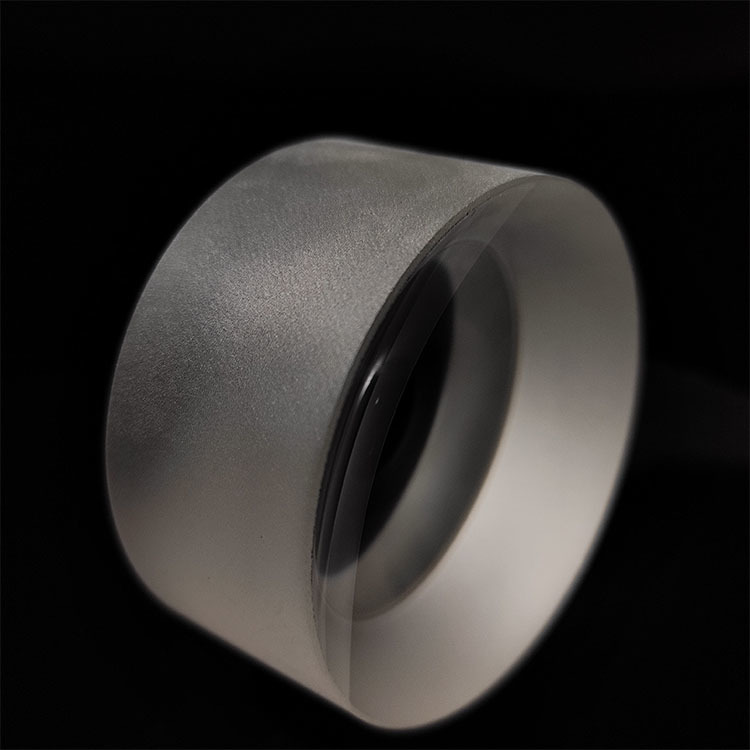
Lens headlight and led headlight which is good?

There are many types of car lights, including led lights, halogen lights, and lens headlights. They are highly selective to users. When entering dusk or dawn, we need to turn on the lights to improve driving safety. There are many kinds of car lights for users to choose at will. The lens headlights have better lighting effects. The headlights are modified lights for led headlights. By adding optical glass lenses in front of the led headlights, the light of the headlights can be more concentrated. Improve the range and illumination effect of the headlights. so lens headlights and led headlights which is good?

25

2024-06

What are the functions of optical lenses in car lights?

A lens is an optical element that can be made from a material of a specified spectrum. Generally, optical glass is used in the visible and near-infrared spectra (IR-A nm)(400-1400nm), and crystal materials are used in the mid-infrared (IR-C nm)(3-50mm). In today's era of continuous development, optical lenses have also begun to be used everywhere, integrated into every corner of our lives, and our lives have been inseparable. Optical lenses are often used in our lamps, so optical lenses are used in car lights. What are the roles?

25

2024-06

The difference and function of different types of optical lens

An optical lens is an optical element used to distribute or disperse light. It is a very widely used optical element used in imaging systems. The lens is a refractor, which may contain one or more elements, and its applications range from microscopes to lasers. In addition, the lens is also an element used in many industries, such as life sciences, imaging, industry or defense industry. Its refractive surface is two spherical (spherical part), or a spherical (spherical part) a plane transparent body. The image it has become has a real image and a virtual image. So what are the differences and functions of different types of optical lenses?

25

2024-06

How to pay attention to the daily use of laser lens?

Lenses are generally divided into two types, one is a single-light lens and the other is a double-light lens. Convex lens plays a convergent role in light rays, which is called convergent lens "; Concave lens plays a divergent role in light rays, which is called divergent lens". A single convex lens can form a real or virtual image, but a single concave lens can only form a virtual image. Laser headlight lenses were only introduced in the car lamp modification market, but the status of laser headlights is much higher than that of xenon lamp lenses and LED lenses. Laser headlights are in a leading position in terms of brightness and lighting effects., So how should I pay attention to the daily use of laser lenses?

25

2024-06

What is the standard of lens inspection?

The lens is made according to the law of light refraction. It is a refractor and an optical element made of transparent materials (such as glass, crystal, etc.).) The image made of lens includes real image and virtual image, which can be generally divided into two categories: convex lens and concave lens. The center part is thicker than the edge part, which is called convex lens, and there are three kinds of convex, plano-convex and concave-convex. The center part is thinner than the edge part is called concave lens, and there are three kinds of double concave, plano-concave and convex concave. So what is the test standard of lens? Let's introduce it to you.

25

2024-06

What are the types of optical lens head mirror?

Optical lens is a spherical optical element made of transparent materials (glass, crystal, etc.) according to the law of light refraction, which can improve the utilization efficiency and luminous efficiency of light. Nowadays, optical lens is more and more widely used. According to the actual application requirements, optical design and modeling are used, and molding molds are manufactured, and suitable lenses are obtained through injection molding. So what are the types of optical lens head mirror? The following small series to introduce.

25

2024-06

What are the factors associated with optical lens resolution?

An optical lens is an optical element made of transparent material and is an independently assembled part. It includes a lens barrel (including an aperture), a lens, a spacer, a stopper and other structures. The more mature technology of optical lens manufacturers is the single substrate coating process, that is, the use of glass, crystal, PC or resin and other materials, through the optical technology to make the lens substrate, and then use the coating process to coat the surface, with wear resistance, anti-fouling, anti-ultraviolet, anti-radiation, anti-blue, anti-glare and other functions. So what are the factors related to the resolution of the optical lens?

25

2024-06

Surface defects of optical components

Surface defects of optical components, often referred to as "surface finish" or "surface defects", are indicators that describe the number and size of pitting, scratches, and edges allowed on a polished surface. In the imaging optical system, the quality of the component surface directly determines the imaging performance of the system, in the field of strong laser and semiconductor applications, when the component surface quality is not good, it will lead to the situation that the optical system can not be used, therefore, it is very necessary to clarify the definition and determination method of the component surface defect. However, in practice, there are many standards for determining surface defects, and the definitions of each standard are not uniform, which brings some confusion to the actual work of optical practitioners. In view of this situation, this paper from the 1185-1974 old national standard, the United States military standard and the new national standard with reference to ISO 10110 three standards, introduces their specific content, as well as the approximate correspondence between each other, so as to help you in the actual work can better identify and control the surface defect index of the component.

25

2024-06

< 12 >